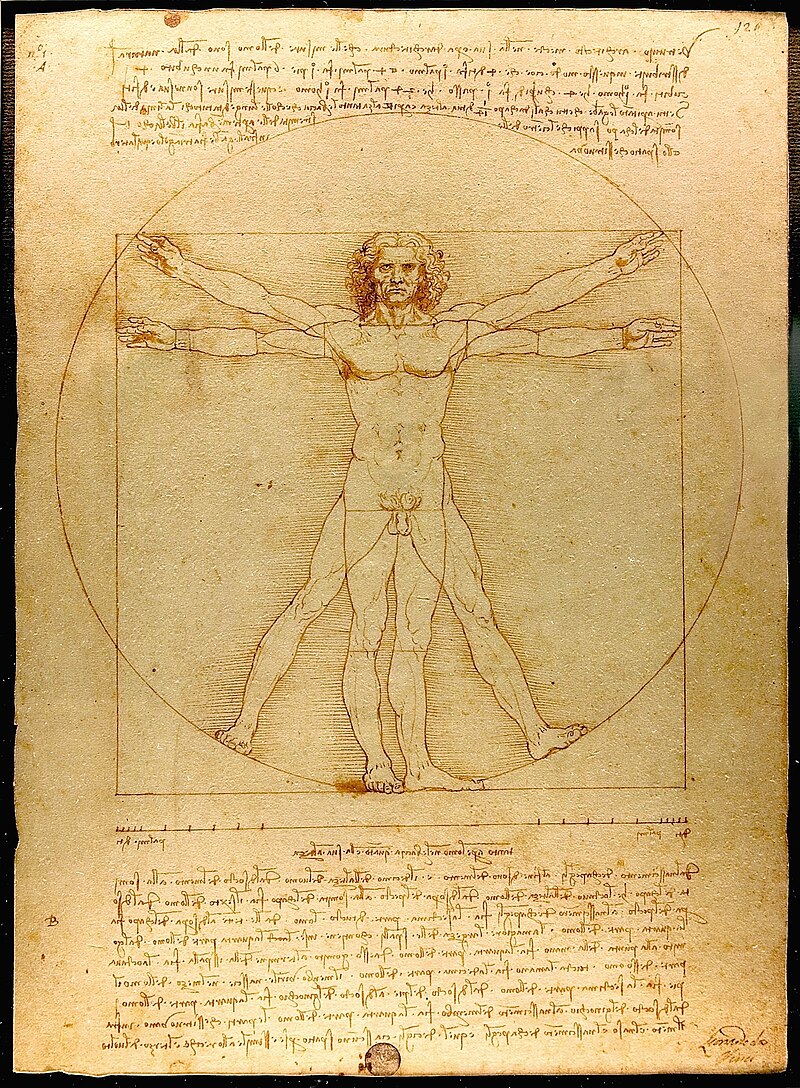
Leonardo da Vinci & the Renaissance Masters

A journey through the genius, rivalry, and beauty of the Italian Renaissance — the era that reinvented art, science, and the human spirit.

Scroll to explore
"Painting is poetry that is seen rather than felt, and poetry is painting that is felt rather than seen."
— Leonardo da Vinci

The Universal Genius

Leonardo da Vinci

Painter, sculptor, architect, musician, mathematician, engineer, inventor, anatomist, geologist, botanist — the original Renaissance man.

Leonardo da Vinci Self-Portrait
1452 — 1519 | Vinci, Republic of Florence

The Mind That Saw Everything

Born in the Tuscan hill town of Vinci, Leonardo was the illegitimate son of a notary and a peasant woman. Apprenticed to the great Andrea del Verrocchio in Florence at age 14, he quickly surpassed his master.

Leonardo's insatiable curiosity led him to dissect cadavers, design flying machines, study the flow of water, and paint some of the most recognized images in human history. His notebooks — written in mirror script — contain over 13,000 pages of observations, inventions, and sketches.

He worked for the Medici, Ludovico Sforza in Milan, Cesare Borgia, and finally Francis I of France, where he spent his final years at the Chateau of Clos Luce near Amboise.

Gallery

Leonardo's Masterworks

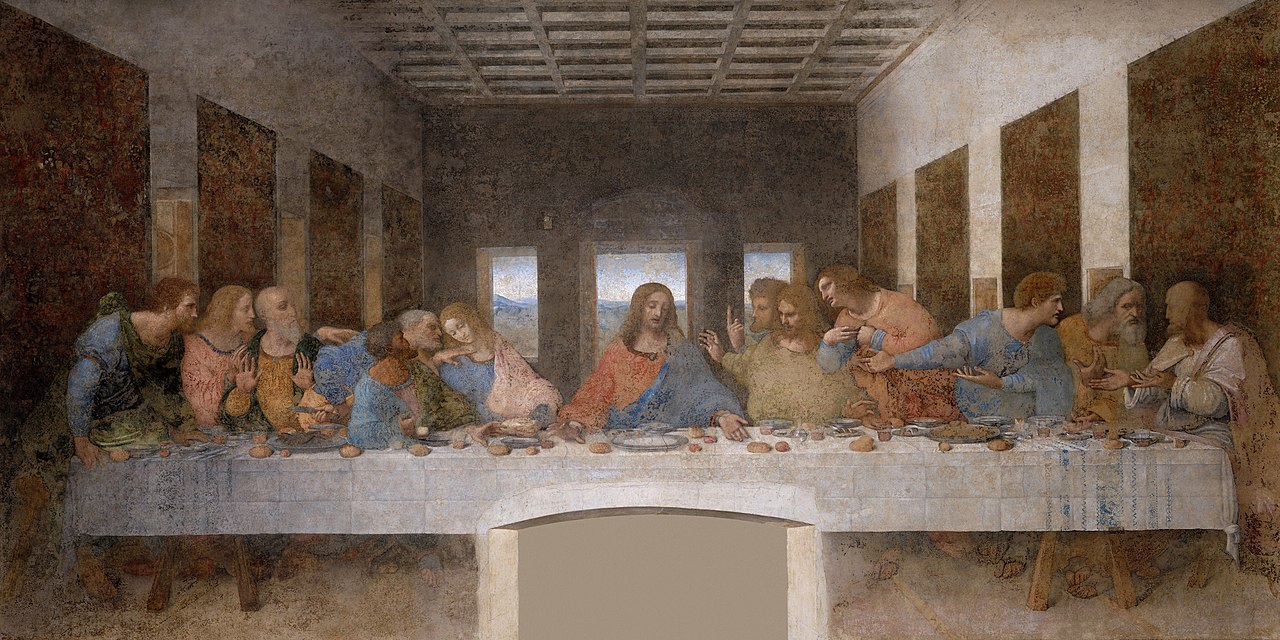
The Last Supper - Full Width

The Last Supper

Leonardo spent three years on this 15 x 29 foot mural. He experimented with tempera on dry plaster instead of traditional fresco, which caused the painting to begin deteriorating within his own lifetime.

Michelangelo portrait by Daniele da Volterra
1475 — 1564 | Caprese, Republic of Florence

Michelangelo Buonarroti

The "Divine One." Sculptor, painter, architect, and poet — Michelangelo considered himself primarily a sculptor, yet created the most famous painted ceiling in history. His rivalry with Leonardo was legendary; the two openly despised each other.

Michelangelo's David, carved from a single block of marble that two other sculptors had abandoned, remains the ideal of human physical beauty. His ceiling of the Sistine Chapel took four years of torturous work on scaffolding, permanently damaging his eyesight.

In his later years, he designed the dome of St. Peter's Basilica — still the largest masonry dome in the world. He worked until six days before his death at age 88.

Raphael self-portrait
1483 — 1520 | Urbino, Duchy of Urbino

Raphael Sanzio

The youngest of the three great masters, Raphael combined the best qualities of both Leonardo and Michelangelo — Leonardo's sfumato and psychological depth with Michelangelo's dynamism and grandeur. The result was a harmony and grace that defined the High Renaissance ideal.

Raphael was also the most socially adept of the three. Where Leonardo was solitary and Michelangelo combative, Raphael was charming and ran a massive workshop of 50+ assistants — a Renaissance creative agency.

He died on his 37th birthday, likely from a fever. Rome mourned as if it had lost a prince. His epitaph reads: "Here lies Raphael, by whom Nature feared to be outdone while he lived, and when he died, feared that she herself would die."

The School of Athens - Full Width

The School of Athens

Raphael placed Leonardo's face on Plato and Michelangelo's on Heraclitus — a tribute to his two greatest rivals, hidden in plain sight in the Vatican.

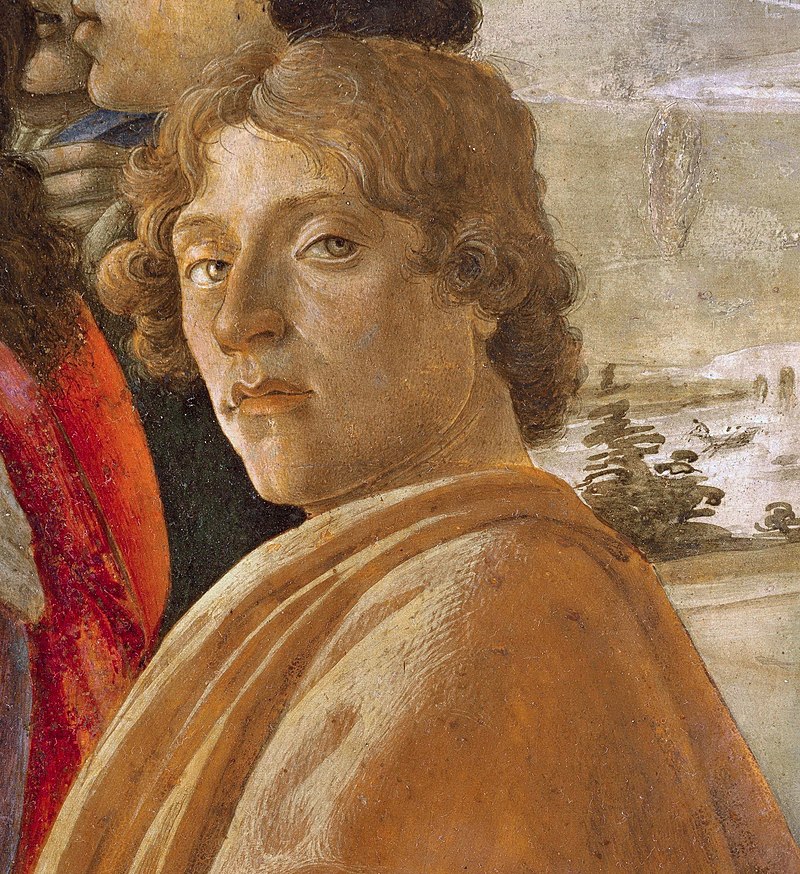
Botticelli self-portrait
1445 — 1510 | Florence, Republic of Florence

Sandro Botticelli

Born Alessandro di Mariano di Vanni Filipepi, Botticelli was the master of line and movement. His flowing, lyrical style was unlike anything else in the Renaissance — more decorative, more dreamlike, more emotionally charged.

He was a favorite of Lorenzo de' Medici and the Neoplatonist philosophers who surrounded him. His mythological paintings — The Birth of Venus and Primavera — are visual philosophy, encoding complex ideas about beauty, love, and the divine in breathtaking compositions.

In the 1490s, Botticelli fell under the spell of the fire-and-brimstone preacher Savonarola, and reportedly burned some of his own paintings in the "Bonfire of the Vanities." His late works became austere and haunted. He died poor and largely forgotten, not rediscovered until the 19th century.

Birth of Venus - Full Width

The Birth of Venus

The first large-scale mythological nude since antiquity. Botticelli's model, Simonetta Vespucci, was considered the most beautiful woman in Florence. She died at 22; Botticelli asked to be buried at her feet.

Titian self-portrait
c. 1488 — 1576 | Pieve di Cadore, Republic of Venice

Titian (Tiziano Vecellio)

The greatest of the Venetian painters and the master of color. While the Florentines built their art on drawing (disegno), Titian and the Venetians championed color (colore) — and the debate between the two became the central argument of Renaissance art theory.

Titian was the painter of emperors and popes. Charles V made him a Count Palatine — an extraordinary honor for an artist. Philip II of Spain was his most devoted patron. His portraits defined how power looked for generations.

His late style — loose, almost abstract brushwork applied with fingers as much as brushes — anticipated Impressionism by 300 years. He lived to nearly 90, painting until the very end. His final work, the Pieta, was finished by his student after plague took him.

"The greater danger for most of us lies not in setting our aim too high and falling short, but in setting our aim too low and achieving our mark."
— Michelangelo Buonarroti

A Renaissance Timeline

1445

Botticelli Born

Alessandro Filipepi born in Florence — the eldest of the great Renaissance painters.

1452

Leonardo Born

Born in Vinci, Tuscany. Apprenticed to Verrocchio by age 14.

1475

Michelangelo Born

Born in Caprese. Apprenticed to Ghirlandaio, then taken into the Medici household.

1483

Raphael Born

Born in Urbino to painter Giovanni Santi. The youngest of the three great masters.

1485

Birth of Venus

Botticelli completes his mythological masterpiece for the Medici villa.

1488

Titian Born

Born in the Dolomite mountains. He would become the greatest Venetian painter.

1498

The Last Supper Completed

Leonardo finishes his revolutionary mural in Milan after three years of work.

1504

David Unveiled

Michelangelo's 17-foot marble giant placed in the Piazza della Signoria, Florence.

1508

Sistine Chapel Begins

Michelangelo begins painting the ceiling. Raphael starts the Stanze in the Vatican simultaneously.

1510

Botticelli Dies

Dies poor and forgotten in Florence, age 65. Not rediscovered for 350 years.

1511

School of Athens

Raphael completes his philosophical masterpiece, with Leonardo as Plato and Michelangelo as Heraclitus.

1519

Leonardo Dies

Dies at Clos Luce, France, age 67. Legend says he died in the arms of King Francis I.

1520

Raphael Dies

Dies on his 37th birthday. All of Rome mourns. The High Renaissance effectively ends.

1564

Michelangelo Dies

Dies in Rome at 88, still working on the Rondanini Pieta. Three days later, Galileo is born.

1576

Titian Dies

Dies of plague in Venice at nearly 90. The last of the great Renaissance masters.